By: Jacob Kim
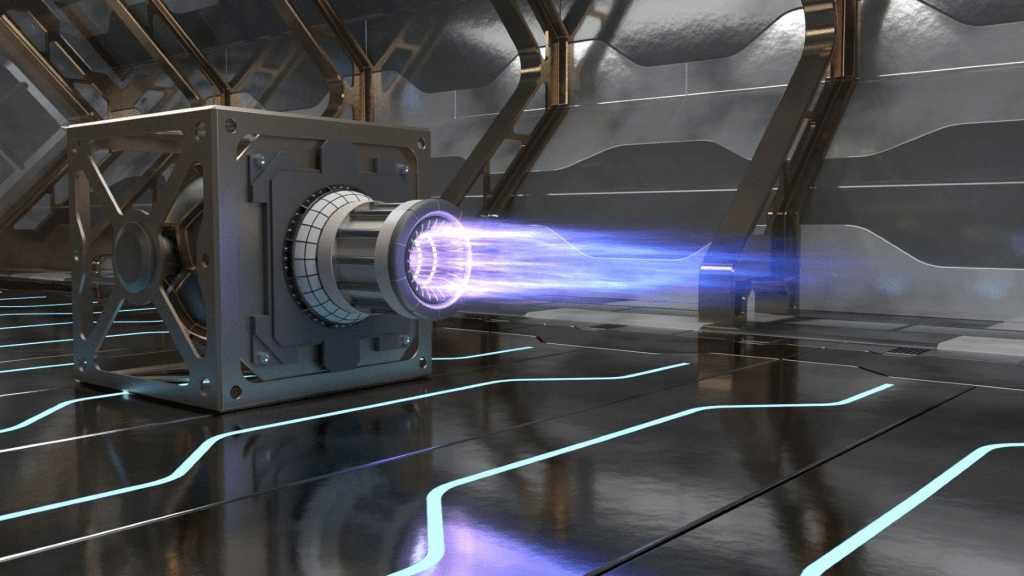
NASA’s support of the Pulsed Plasma Rocket (PPR) — an advanced nuclear propulsion system under development by Howe Industries — may seem like a leap forward for space exploration alone. But its potential implications for the climate crisis here on Earth are just as staggering.
At its core, the PPR represents a fusion of compact design, ultra-high efficiency, and nuclear energy harnessed with precision. Using pulsed nuclear fission to transform solid fuel into plasma, the PPR creates bursts of propulsion with minimal waste and maximum thrust. It’s efficient, affordable, and radically faster — promising to cut crewed Mars missions from nearly a year to just two months. But why does this matter for the climate?
Because climate change isn’t just a terrestrial issue. It’s a systems issue — one of energy use, sustainability, and how we imagine progress. Right now, most of our transportation systems, including those powering rockets and satellites, are deeply carbon-intensive. If technologies like the PPR prove viable in the vacuum of space, they could lead the way in transforming how we think about high-energy systems on Earth.
Imagine a future where the principles of PPR — compact nuclear energy, plasma propulsion, and efficient thermal regulation — are adapted for Earth-based applications. From next-generation cargo transport to clean intercontinental shipping or even ultra-efficient satellite launch systems, the ripple effect of this innovation could be enormous. This isn’t just about going to Mars faster. It’s about accelerating our departure from fossil fuels and reimagining clean energy possibilities with the urgency our planet demands.
The timing couldn’t be more critical. As deregulatory forces push back against energy efficiency standards — gutting appliance rules, undercutting climate policies, and prioritizing fossil fuel profits — technologies like the PPR stand as a counterforce: evidence that clean, powerful, and sustainable innovation isn’t just possible — it’s already happening.
Moreover, the PPR underscores the role of public investment in climate and space innovation. Backed by NASA’s NIAC program, this engine is a testament to what’s achievable when science is prioritized over politics, and when long-term vision outweighs short-term gain.
Yes, the road ahead is steep. Nuclear safety, engineering complexity, and funding continuity are major hurdles. But if we meet them, the Pulsed Plasma Rocket won’t just change how we explore space — it could help us save Earth by expanding the frontier of clean energy. In a time of deep ecological uncertainty, that’s the kind of propulsion we need most.
Sources
https://www.coachesdatabase.com/nasa-secretly-testing-the-perfect-fuel/
 Energy Outlook
Leave a comment