By: Jacob Kim
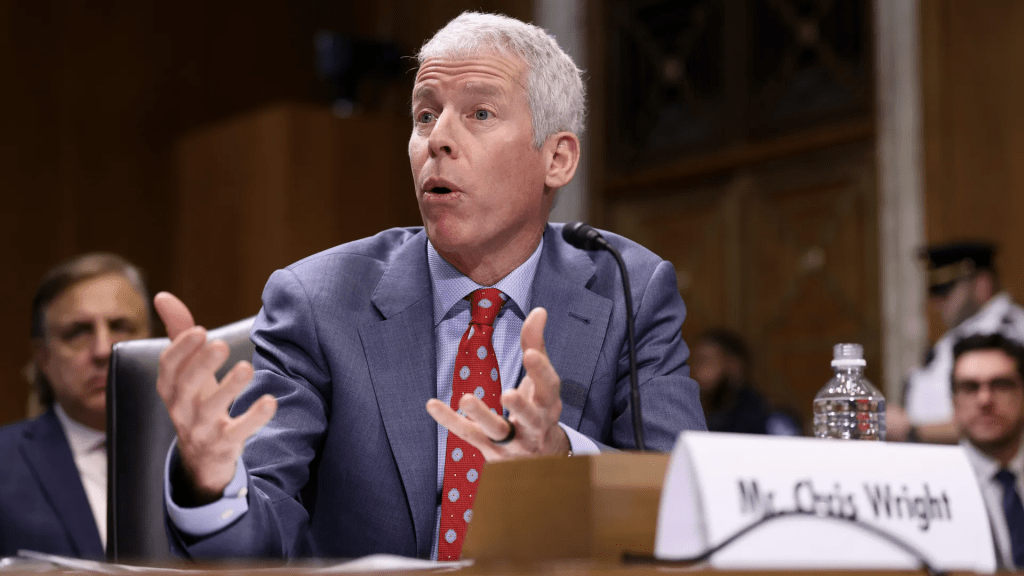
Chris Wright, the fossil fuel executive nominated by President-elect Donald Trump for energy secretary, presents a polarizing choice for the role. His confirmation hearing on Wednesday highlighted his commitment to Trump’s pro-fossil-fuel “bold energy agenda” and raised critical questions about the future of U.S. energy policy, climate change, and sustainability.
Wright’s Vision: Energy Security or Climate Risk?
Wright, the CEO of Liberty Energy, expressed unwavering support for Trump’s agenda to bolster oil, natural gas, and coal production. He champions the idea that these resources can alleviate global poverty, arguing that energy is foundational to human development. Yet his acknowledgment of fossil fuels as a driver of climate change paints a complex picture.
At the hearing, Wright admitted that burning hydrocarbons has increased atmospheric CO2 by 50%, contributing to climate warming. Despite this, he rejected the binary of “dirty” versus “clean” energy, emphasizing tradeoffs between energy accessibility and environmental sustainability. While he acknowledged the need for solutions to climate change, his strong ties to the fossil fuel industry cast doubt on whether his tenure would prioritize meaningful action over entrenched interests.
A Troubling Past: Wildfires and Climate Denial
Wright’s history of downplaying climate risks, such as labeling concerns over wildfires as “hype,” raises concerns about his ability to lead an energy transition that addresses the urgent realities of climate change. When pressed by Senator Alex Padilla about his stance on wildfires, Wright doubled down on his controversial remarks, even as scientists increasingly link wildfire intensity to climate-driven drought conditions.
Protesters Voice Concerns
The hearing’s interruptions by protesters underscored the broader anxiety surrounding Wright’s nomination. Demonstrators, many young, called attention to the urgency of climate action. Their chants and signs—“Big Oil profits, LA burns”—highlighted a generational divide in energy policy priorities.
Hopeful Signals: Geothermal and Nuclear Energy
Wright’s involvement with renewable and low-carbon energy projects, including geothermal and modular nuclear reactors, offers a glimmer of optimism. He described geothermal energy as a vast and untapped resource and expressed enthusiasm for accelerating nuclear energy’s role in global electricity production. However, his broader agenda to expand fossil fuel infrastructure, such as liquefied natural gas exports from Alaska, suggests these initiatives may be secondary to fossil fuel development.
Can We Trust Chris Wright?
Wright’s promise to sever industry ties if confirmed is an important step but does little to assuage concerns about his commitment to a sustainable energy future. His statements reveal a nuanced understanding of climate science but fail to align with the bold action needed to combat climate change.
A Path Forward?
Wright’s nomination reflects a stark choice: whether to double down on fossil fuel dependency or embrace a forward-thinking energy policy that prioritizes climate resilience. While his support for geothermal and nuclear energy signals potential for diversification, his track record raises doubts about his ability to steer the U.S. toward a sustainable energy future.
Ultimately, the question is not only whether Chris Wright will serve as an effective steward of U.S. energy policy but also whether his vision aligns with the urgent need for climate action. The stakes are too high for anything less than a transformative approach.
 Energy Outlook
Leave a comment