By: Jacob Kim
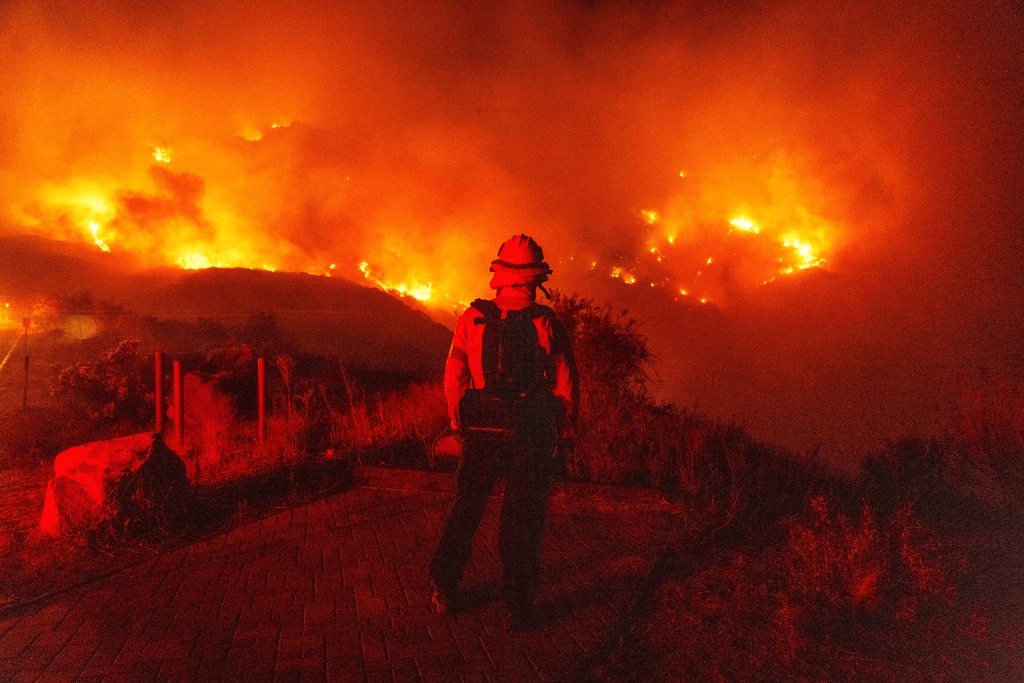
The devastating Franklin Fire in Malibu underscores how climate change exacerbates the frequency and intensity of wildfires, putting communities at heightened risk. Prolonged droughts, higher temperatures, and shifting weather patterns have created conditions that are increasingly conducive to large-scale fires. Years of persistent drought in Southern California have dried out vegetation, turning the region into a tinderbox. This is compounded by rising temperatures caused by global warming, which not only extend fire seasons but also intensify heatwaves. These extreme heat conditions lower moisture levels in both vegetation and soil, making the environment highly flammable.
Additionally, strong winds like the Santa Ana winds, a natural phenomenon in the region, act as accelerants for wildfires, spreading flames at an alarming rate. While these winds are not new, climate change alters atmospheric patterns, potentially increasing their frequency and intensity during fire-prone seasons. The combination of dry conditions and invasive species, such as cheatgrass, also adds to the fuel load, while dead trees, weakened by drought and pests, exacerbate the problem. Malibu’s unique geography—steep canyons that funnel winds and dense brush—makes the area especially vulnerable. These natural risks, intensified by climate change, were evident as the Franklin Fire consumed more than five football fields per minute at its peak.
The impacts of this fire extend beyond the immediate threat of flames. Over 20,000 residents were forced to evacuate, including several celebrities, while nearly 8,000 homes and businesses were put in jeopardy. Power outages affected tens of thousands, with schools closing across the region. For longtime residents like Fred Roberts, the loss of homes also means the destruction of lifelong memories and historical significance. This fire is part of a broader pattern of delayed ecological recovery and increased vulnerability in fire-prone regions, where repeated burns prevent natural systems from rebuilding resilience.
To address these challenges, action must be taken on multiple fronts. Fire-resilient building practices and materials can reduce structural losses, while controlled burns and vegetation management can help mitigate the risks. However, long-term solutions require tackling the root cause: climate change. Reducing greenhouse gas emissions is critical to slowing the warming trends that make such fires more frequent and intense. The Franklin Fire serves as a grim reminder that climate change is no longer a distant threat—it is a present and growing crisis reshaping lives and landscapes across California and beyond.
 Energy Outlook
Leave a comment