By: Jacob Kim
The stunning conclusion to Syria’s 13-year-long conflict, culminating in the fall of the Assad regime, marks a pivotal moment in the nation’s tumultuous history. Beginning with the initial uprising in 2011, Syria’s civil war spiraled into a prolonged and devastating struggle, leaving its mark on millions of lives, infrastructure, and the environment. The recent overthrow of the Assad family’s 50-year dictatorship by rebel groups, led by Hayat Tahrir al-Sham (HTS), showcases both the resilience of opposition forces and the extent of the damage wrought upon the country. This rebellion unfolded rapidly, with key cities such as Aleppo, Hama, Homs, and Daraa falling to the rebels in a matter of weeks. The victory culminated in the liberation of Damascus on December 8, 2024, a day that will be etched in history as the end of one of the most oppressive regimes in the region. While this dramatic political shift signifies hope for many Syrians, the war’s far-reaching effects extend beyond politics, raising serious questions about its environmental and climate-related consequences.
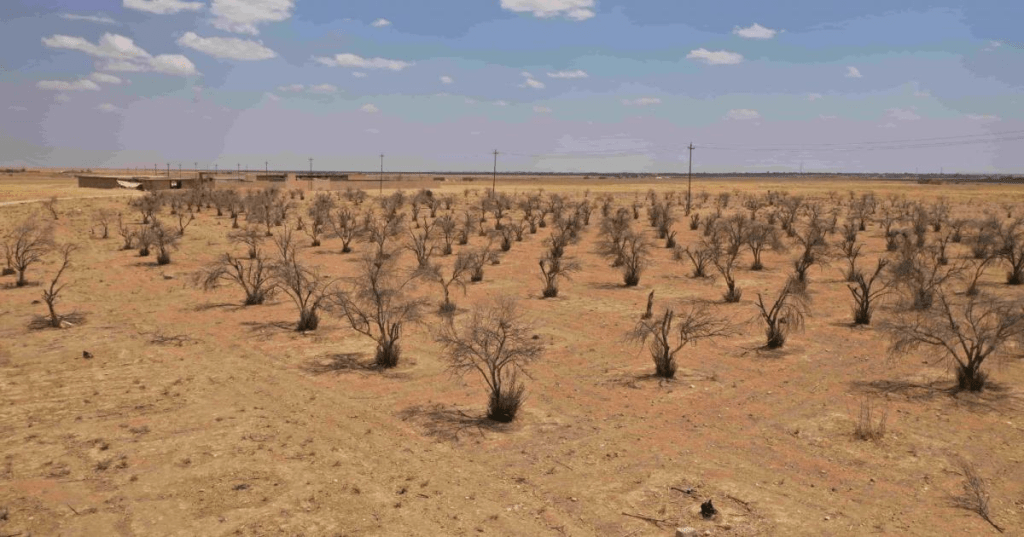
The Syrian Civil War has been one of the most environmentally destructive conflicts of the 21st century. Years of fighting devastated cities, uprooted communities, and disrupted agricultural systems. Heavy bombing and artillery shelling destroyed forests and ecosystems, particularly in rural areas where battles raged. Refugees seeking firewood for survival contributed to deforestation, further depleting natural resources. Syria, already a water-scarce nation, suffered extensive damage to its water infrastructure, with bombing campaigns targeting water facilities and leaving millions reliant on unsustainable groundwater extraction or exposed to waterborne diseases. In addition, years of neglect and warfare exacerbated soil erosion and desertification, rendering vast tracts of farmland unproductive. Farmers abandoned agricultural activities due to the war, leaving fertile lands vulnerable to degradation. Urban areas like Aleppo and Homs, subjected to relentless bombings, became sites of rubble, chemical spills, and hazardous waste accumulation, further compounding environmental degradation. Air quality deteriorated significantly due to the use of crude oil in generators and the burning of waste materials.
The Syrian conflict is inextricably linked to climate change, both as a precursor and as an exacerbating factor. Before the war, Syria experienced one of the worst droughts in its history, lasting from 2006 to 2010. This drought devastated agricultural production, forced rural populations into urban centers, and fueled discontent that contributed to the 2011 uprising. Climate scientists have identified the drought as a climate-driven phenomenon, amplifying the region’s natural vulnerability to arid conditions. As Syria transitions into a post-conflict phase, the effects of climate change are likely to complicate recovery efforts. Rising temperatures and unpredictable rainfall patterns threaten to undermine rebuilding efforts, especially in agriculture. Moreover, the environmental damage caused by the war—loss of biodiversity, water shortages, and soil degradation—leaves Syria ill-equipped to adapt to the increasing pressures of climate change.
The fall of the Assad regime and the conclusion of the Syrian Civil War offer a rare opportunity to address the dual challenges of rebuilding a nation and mitigating climate risks. Sustainable reconstruction efforts could include reforestation projects to restore ecosystems and combat desertification, investments in resilient water infrastructure to address long-term water scarcity, and renewable energy initiatives to reduce reliance on crude oil and improve air quality. The Syrian rebellion serves as a stark reminder of the interconnectedness of social, political, and environmental systems. By prioritizing environmental recovery and climate resilience, Syria could lay the groundwork for a more stable and sustainable future. The global community must recognize the role of climate change in conflicts like Syria’s and work to address its impacts, ensuring that such tragedies are not repeated.
Sources
https://syriadirect.org/op-ed-syrias-climate-emergency-conflict-no-excuse-for-inaction/
https://www.nbcnews.com/news/world/syria-assad-fall-rebels-hts-what-now-rcna183401
 Energy Outlook
Leave a comment