By: Jacob Kim
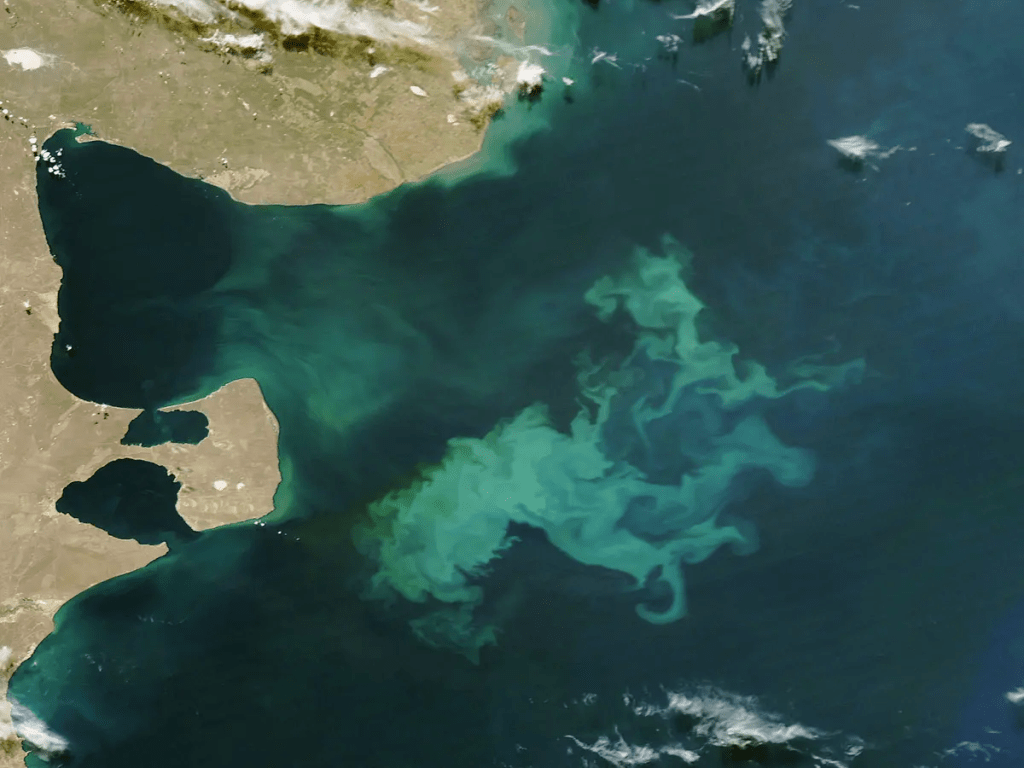
Recent discoveries about methanethiol, a marine sulfur gas, have added a surprising twist to our understanding of climate dynamics. For the first time, scientists have quantified global emissions of methanethiol, uncovering its significant role in cooling the climate. This discovery not only enhances our understanding of the ocean’s influence on global temperatures but also underscores the precarious balance of natural processes that help mitigate the impacts of climate change.
Methanethiol, produced by microscopic plankton, enhances aerosol formation in the atmosphere. These aerosols reflect sunlight and promote cloud formation, creating a cooling effect that offsets some of the heat trapped by greenhouse gases. Researchers found that methanethiol increases marine sulfur emissions by 25%, a much larger contribution than previously understood, particularly in the largely unstudied polar regions like the Southern Ocean.
While this finding provides hope that natural processes offer some resistance to global warming, it also reveals the fragility of the Earth’s climate regulation system. Climate models have historically underestimated the reflective cooling effect of clouds over oceans like the Southern Ocean, which helps explain discrepancies between predictions and observed temperatures. By incorporating methanethiol emissions into these models, scientists can now make more accurate predictions about warming thresholds, such as the critical 1.5°C or 2°C limits established in global climate accords.
However, this discovery is not a cause for complacency. Methanethiol and other sulfur emissions are part of a delicate natural equilibrium. If disrupted—by overfishing, pollution, or ocean acidification—the plankton responsible for these emissions may suffer, reducing their capacity to moderate warming. Additionally, the benefits of these natural processes are overshadowed by the accelerating impacts of human activity, such as rising carbon dioxide and methane emissions.
This newfound understanding of methanethiol emphasizes that the fight against climate change must intensify. While nature provides some buffering mechanisms, they are neither sufficient nor guaranteed to protect us from the worst impacts of warming. Methanethiol’s cooling effects are most pronounced in regions like the Southern Hemisphere, where human influence is minimal. In contrast, the Northern Hemisphere, dominated by human activity and emissions, continues to warm at an alarming rate, with greenhouse gases overwhelming any natural cooling effects.
To prevent catastrophic warming, a faster and stronger response is necessary. Nations must accelerate their transitions to renewable energy, enforce stricter emissions regulations, and invest heavily in sustainable infrastructure. Protecting the health of the oceans, where plankton produce these critical emissions, is equally vital. Policies aimed at reducing overfishing, curbing ocean pollution, and addressing acidification must be prioritized. At the same time, investing in climate research is essential to uncover hidden dynamics like methanethiol and develop more accurate predictive models.
The urgency cannot be overstated. While methanethiol may partially offset some warming, it is not a solution to climate change. Rising temperatures are already causing irreversible impacts, including the loss of Arctic ice, sea-level rise, and biodiversity collapse. The longer we delay aggressive action, the harder it will be to stabilize the climate, and the more we will rely on fragile and uncertain natural systems to compensate for human-caused damage.
In light of this discovery, the message is clear: while the natural world offers a remarkable capacity to buffer against climate change, it is no substitute for decisive human action. The science shows we must act quicker and stronger to reduce emissions, protect ecosystems, and prevent the worst impacts of a warming planet. If we fail, even nature’s hidden allies like methanethiol will not be enough to save us.
Source
 Energy Outlook
Leave a comment