By: Jacob Kim
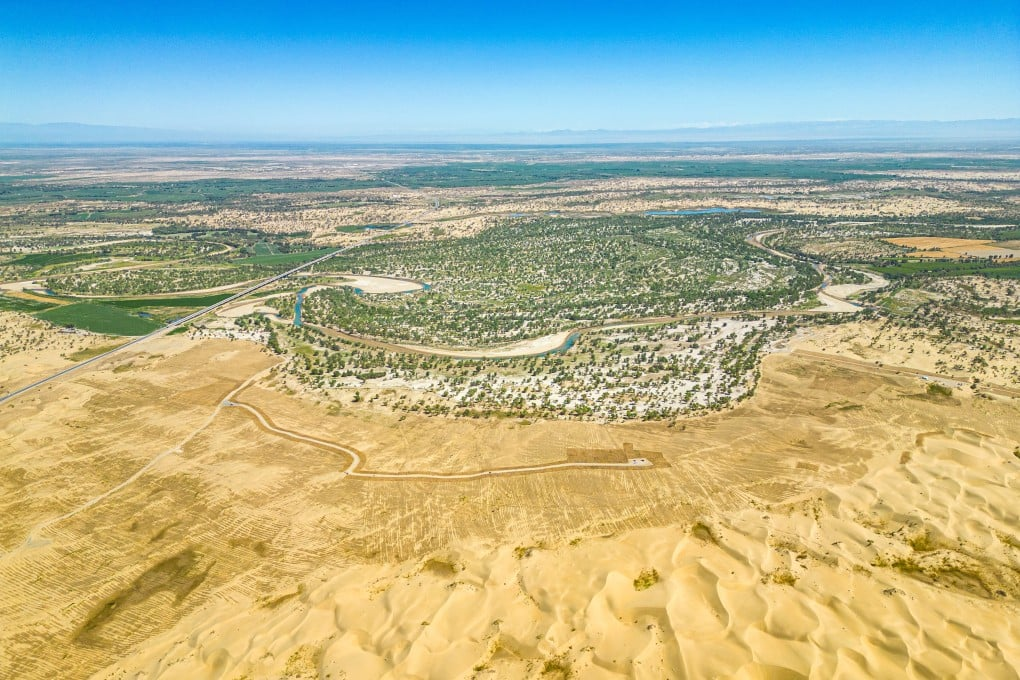
China has recently marked a monumental achievement in its efforts to tackle climate change and desertification, completing a 3,000-kilometer green belt of trees around the Taklamakan Desert, the country’s largest desert. This massive undertaking, finalized after 46 years of sustained effort, demonstrates China’s commitment to environmental restoration and mitigating the impact of climate change.
The project is part of the “Three-North Shelterbelt” initiative, also known as the Great Green Wall, launched in 1978. It has seen the planting of over 30 million hectares (116,000 square miles) of trees across the country, transforming vast stretches of barren land into green landscapes. This has brought China’s total forest coverage to over 25% as of last year, up significantly from just 10% in 1949. In the northwestern Xinjiang region, where the Taklamakan Desert is located, forest coverage has risen from 1% to 5% in the last four decades.
The primary goal of the shelterbelt project has been to combat desertification—a pressing issue in a country where 26.8% of the land remains classified as desertified. By creating tree barriers, China aims to stabilize sand dunes, prevent the spread of deserts, and reduce the frequency and intensity of sandstorms that often reach cities like Beijing during the spring.
The green belt around the Taklamakan Desert, however, has faced challenges. Critics point out that tree survival rates have been inconsistent, with many species struggling to adapt to the harsh, arid conditions. Furthermore, sandstorms continue to pose a problem, raising questions about the effectiveness of afforestation efforts in curbing this natural phenomenon.
China remains undeterred. Forestry officials, such as Zhu Lidong from Xinjiang, have outlined plans to reinforce existing green belts and expand reforestation projects. This includes restoring poplar forests on the desert’s northern edge by redirecting floodwaters and creating new forest networks to shield farmland and orchards on the western perimeter.
The project’s significance extends beyond combating desertification. Forests play a crucial role in sequestering carbon dioxide, one of the primary greenhouse gases contributing to global warming. China’s efforts to increase its forest cover are part of its broader climate change strategy, which includes pledges to peak carbon emissions before 2030 and achieve carbon neutrality by 2060.
While the Taklamakan green belt is a symbol of progress, the road ahead is challenging. The project underscores the complexities of addressing climate change in vast and diverse landscapes. Balancing the immediate need for ecological restoration with long-term sustainability remains a delicate task.
China’s work toward greening its deserts is an ambitious endeavor that reflects the country’s recognition of its environmental responsibilities. As the world grapples with the escalating impacts of climate change, initiatives like these not only contribute to global climate goals but also set an example of perseverance and innovation in the face of ecological challenges
 Energy Outlook
Leave a comment