By: Jacob Kim
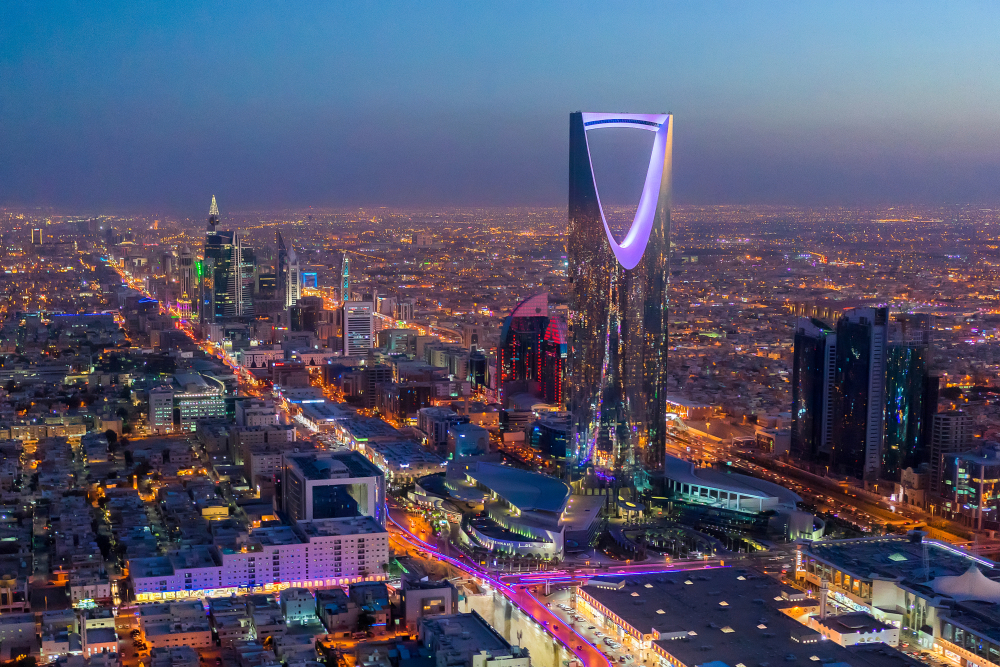
Saudi Arabia’s recent announcement to invest $10 billion into green hydrogen through its Public Investment Fund has sent waves through the renewable energy landscape. While high costs and uncertain demand have hindered many green hydrogen projects around the world, Saudi Arabia’s commitment has sparked a renewed sense of possibility for hydrogen’s role in the global energy transition. In a market currently plagued by project cancellations and scaled-back ambitions, Saudi Arabia’s bet could signal a pivotal shift—one that may either help green hydrogen finally take off or expose further challenges in scaling up this clean energy source.
A Global Industry at a Crossroads
Green hydrogen, produced using renewable energy sources like solar or wind to split water into hydrogen and oxygen, is seen as a potential game-changer in decarbonizing hard-to-electrify sectors, such as heavy industry and shipping. However, the journey to large-scale adoption has been far from smooth. Today, green hydrogen remains several times more expensive than conventional hydrogen made from natural gas, a hurdle that has discouraged many companies from making substantial commitments.
In recent months, several high-profile green hydrogen projects have slowed down or been canceled outright. For instance, Masdar, an energy company in the UAE, recently postponed its target to produce one million tons of green hydrogen by 2034. Similarly, German utility Uniper scrapped a $10 billion investment in green hydrogen production due to a lack of customer demand. Meanwhile, Australian mining magnate Andrew Forrest had ambitious plans to turn Fortescue Metals Group into a green hydrogen powerhouse, aiming for 15 million tons annually by 2030, only to realize the market was not yet ready to support this vision.
Despite these setbacks, Saudi Arabia appears undeterred. The kingdom’s Public Investment Fund has made its intentions clear, with plans to adjust the scale of investment depending on market demand. This confidence could stem from Saudi Arabia’s unique strengths and strategic position, potentially giving it an edge in green hydrogen production where others have faltered.
Saudi Arabia’s Edge: Securing Demand and Lowering Costs
One of Saudi Arabia’s greatest advantages in green hydrogen lies in its abundant, low-cost solar resources. The country’s vast desert landscape receives consistent sunlight, ideal for solar energy production, which can drive down the costs of green hydrogen production over time. This geographical advantage positions Saudi Arabia to produce green hydrogen at lower prices compared to regions with higher energy costs.
Even more significantly, Saudi Arabia’s green hydrogen project—slated for completion by the end of 2026—has reportedly secured commitments from 23 banks, which have agreed to purchase the plant’s entire output. This arrangement is crucial because, without guaranteed buyers, green hydrogen production can quickly become economically unsustainable. The kingdom’s ability to lock in demand from equity partners could be the linchpin that propels its green hydrogen initiative forward, setting it apart from other projects that lack similar backing.
Implications for Global Hydrogen Development
Saudi Arabia’s investment could influence the global green hydrogen market in several ways. If successful, it may signal to other nations and investors that large-scale green hydrogen production is not only viable but can also attract long-term buyers, which has been one of the technology’s biggest barriers to date. This proof of concept could encourage other governments and corporations to revisit their green hydrogen strategies, leading to renewed investment and, potentially, international collaboration on hydrogen infrastructure.
Moreover, Saudi Arabia’s move could pressure other energy-rich nations to develop green hydrogen capabilities. In the Middle East alone, countries like the UAE and Qatar may feel compelled to strengthen their positions in the green hydrogen sector to avoid ceding ground to Saudi Arabia. The kingdom’s bold investment may also motivate countries in other sun-rich regions—such as Australia and parts of Africa—to explore their own green hydrogen projects with greater ambition, especially if they can follow Saudi Arabia’s lead in securing demand agreements.
Challenges Remain
Despite the promising aspects of Saudi Arabia’s strategy, challenges remain. The primary hurdle for green hydrogen will continue to be cost-competitiveness with hydrogen derived from natural gas. While Saudi Arabia’s solar advantage may help reduce costs, subsidies or government incentives are still likely needed to bring prices down to levels competitive with conventional hydrogen sources.
Additionally, the success of Saudi Arabia’s green hydrogen project relies heavily on stable and growing demand for green hydrogen in global markets. Currently, only a few industries are able to justify the premium for green hydrogen, and large-scale adoption will require extensive infrastructure for production, storage, and transportation. Saudi Arabia’s $10 billion investment is significant but likely just a fraction of what will be required for green hydrogen to truly scale as a globally traded commodity.
A Test for the Future of Green Hydrogen
Saudi Arabia’s bet on green hydrogen arrives at a critical moment for the global energy transition. If the kingdom can successfully produce and sell green hydrogen on a large scale, it could validate green hydrogen as a viable component of the global energy mix, inspiring other nations and companies to follow suit. This would mark a major milestone in the quest for cleaner fuels and the decarbonization of heavy industry.
On the other hand, if Saudi Arabia encounters the same obstacles as other projects—unsustainable production costs and limited demand—it could reinforce skepticism around green hydrogen’s role in the energy transition. Such an outcome would signal that green hydrogen, at least for now, remains a technology ahead of its time.
Conclusion
Saudi Arabia’s $10 billion gamble on green hydrogen may either set the stage for a new era in clean energy or underscore the challenges of commercializing green hydrogen at scale. As the world watches this ambitious project unfold, it may soon become clear whether green hydrogen can meet its promise as a globally traded commodity. If Saudi Arabia’s initiative succeeds, it could pave the way for a global green hydrogen market; if it fails, it may prompt the world to explore alternative pathways to achieve net-zero emissions. In either case, Saudi Arabia’s bold move is likely to shape the future of hydrogen development on a global scale.
 Energy Outlook
Leave a comment