By: Jacob Kim
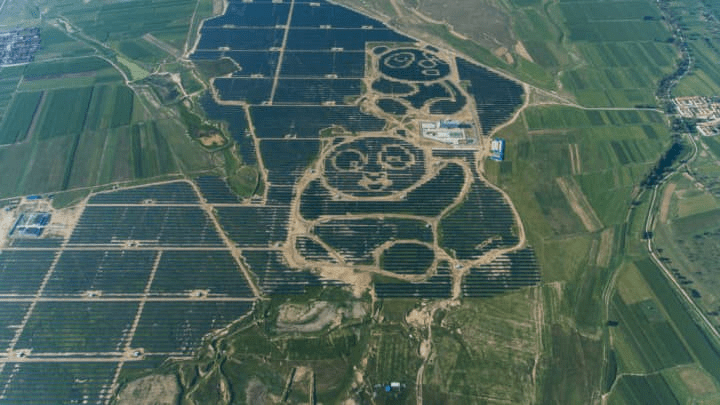
China’s rapid rise as a dominant player in the global green energy market is sparking alarm in Western countries. Benefiting from generous government subsidies, Chinese companies are not only outpacing their Western competitors but also flooding the market with cheaper renewable energy products. As a result, Western nations are increasingly resorting to tariffs and other trade measures to protect their own industries, but these moves risk escalating into a full-blown trade war.
The crux of the issue lies in China’s state-backed approach to green energy. Chinese companies, bolstered by significant financial support from their government, have been able to produce renewable energy products—such as solar panels, wind turbines, electric vehicles (EVs), and batteries—at a lower cost than their Western counterparts. This advantage has allowed Chinese firms to capture substantial market share, squeezing out rivals in the U.S. and Europe. In fact, earlier this year, U.S. Treasury Secretary Janet Yellen warned that China’s national underwriting for its energy companies was creating an oversupply problem, distorting global markets, and hurting industries in other countries.
The numbers are staggering. According to a report by Nikkei, in 2023, Chinese companies controlled 59.3% of the global photovoltaic (solar panel) market, a significant increase from the previous year. In the wind energy sector, Chinese firms held four of the top five spots, doubling their presence compared to 2022 and claiming 44.2% of the market. Meanwhile, the Chinese electric vehicle company BYD has rapidly grown its global market share to 14.7%, closing in on industry leader Tesla. These gains have largely come at the expense of Western companies, such as European wind energy giant Vestas, which saw its market share drop as Chinese competitors surged ahead.
This expansion has drawn sharp reactions from the U.S. and European Union. The Biden administration has adopted a firm stance on trade with China, continuing the aggressive tariff policies initiated by former President Donald Trump. In September 2024, the U.S. finalized new tariffs on a broad range of Chinese goods, including key green energy products. These tariffs, set to roll out over the next two years, impose a 100% duty on Chinese EVs, a 25% tariff on lithium-ion batteries, and a 50% tariff on photovoltaic solar cells. Similar measures are being considered in Europe, where the EU is weighing duties of 8% to 35% on Chinese electric vehicles, with a final decision expected soon. Such actions are intended to buy time for Western companies, such as Volkswagen and Stellantis, to adapt to the growing competition.
However, these tariffs could provoke further retaliation from China, leading to a new round of tit-for-tat measures. Beijing has already threatened to impose tariffs on European goods, including luxury cars, alcohol, and food products, raising the specter of a wider trade conflict.
The trade disputes over renewable energy products reflect a broader geopolitical competition between China and the West. China’s ability to produce and export green energy technologies at a lower cost gives it a significant edge in the race to dominate the energy markets of the future. This is particularly troubling for Western countries, which have prioritized renewable energy development as part of their efforts to combat climate change. As Chinese companies take the lead in these sectors, Western nations are grappling with the economic and strategic implications of this shift.
The U.S. is responding with domestic measures aimed at strengthening its own renewable energy capabilities. For example, solar cell manufacturing in the U.S., which had been decimated by Chinese competition, is seeing a revival thanks to tax credits provided by the 2022 Inflation Reduction Act. In Georgia, a solar panel factory that closed in 2017 has reopened, illustrating the push to rebuild a competitive domestic green energy sector. Yet, despite these efforts, the gap between Chinese and Western firms continues to grow.
As China’s green energy dominance intensifies, the stakes for Western nations are rising. On one hand, China’s ability to produce cheaper renewable energy products could help accelerate the global transition to a low-carbon economy, a critical goal in the fight against climate change. On the other hand, Western governments worry that their industries could be left behind, unable to compete with China’s subsidized firms. The challenge for the U.S. and Europe will be finding a balance between protecting their own industries and working within an increasingly globalized and interconnected green energy market.
In the end, the West’s efforts to counter China’s rise in the green energy sector may depend not just on trade policy, but also on innovation and investment in domestic industries. As the world moves toward a future dominated by renewable energy, the competition between China and the West is likely to only intensify, with far-reaching consequences for both the global economy and the environment.
Sources
https://asiatimes.com/2024/09/china-is-winning-the-race-to-net-zero/
 Energy Outlook
Leave a comment