By: Jacob Kim
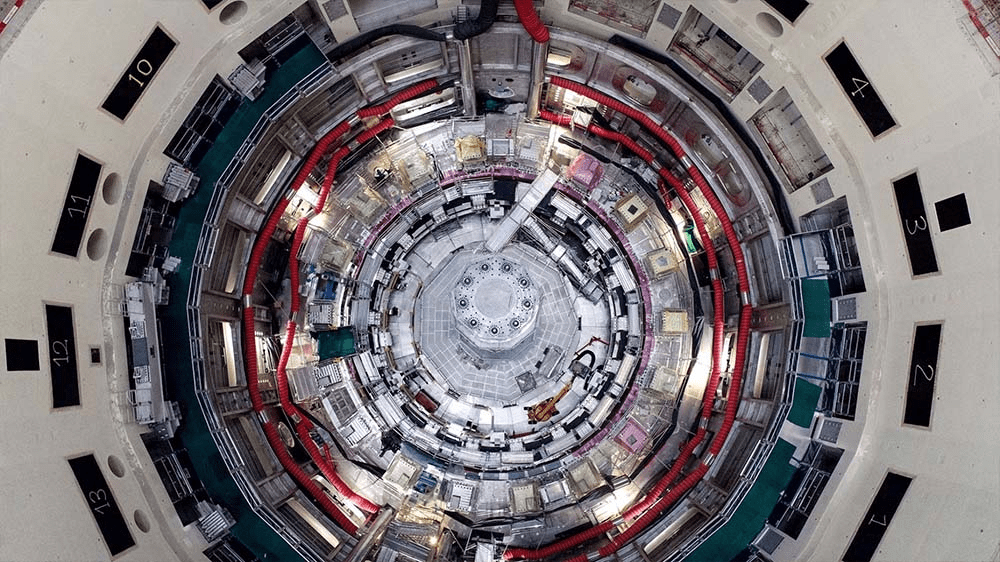
The International Thermonuclear Experimental Reactor (ITER), planned for construction in Southern France, has faced another delay, with its start date now pushed to 2039. Originally slated to begin operations in 2025, ITER has seen multiple postponements, underscoring the challenges of achieving fusion energy. Even when ITER is completed, it will remain an experimental facility, not intended for actual energy production.
Currently, Tokamaks represent the forefront of fusion reactor technology. These devices, with their distinctive doughnut-shaped design and powerful magnetic fields, can contain plasma at temperatures exceeding 100 million degrees Kelvin. Despite these advancements, current Tokamaks are not yet large enough to produce self-sustaining reactions that generate more energy than they consume. The efficiency of such reactions is measured by a Q rating (a measure of the energy surplus a reaction produces), where the current leading Tokamak in Japan, the JT-60SA, achieves a Q rating of just 1. In contrast, ITER aims to reach a Q rating of 10, a significant leap forward. However, the energy required to initiate a fusion reaction currently outweighs the energy produced by about 100 to 1.
Even if we succeed in creating a self-sustaining fusion reaction that generates more energy than it consumes, capturing and converting that energy into electricity presents an additional challenge. Notably, ITER has no plans to convert the energy it produces into electricity.
With ITER’s completion now 15 years away, and the prospect of fusion energy powering our cities even more distant, the focus on research and development in fusion technology remains critical for the future. However, in the meantime, investing in more viable energy sources is essential to meeting our current energy goals.
Source
https://www.livescience.com/physics-mathematics/worlds-largest-nuclear-reactor-is-finally-completed-but-it-wont-run-for-another-15-years
 Energy Outlook
Leave a comment